Our Regenerative Farming Practices
Regenerative & Organic Farming
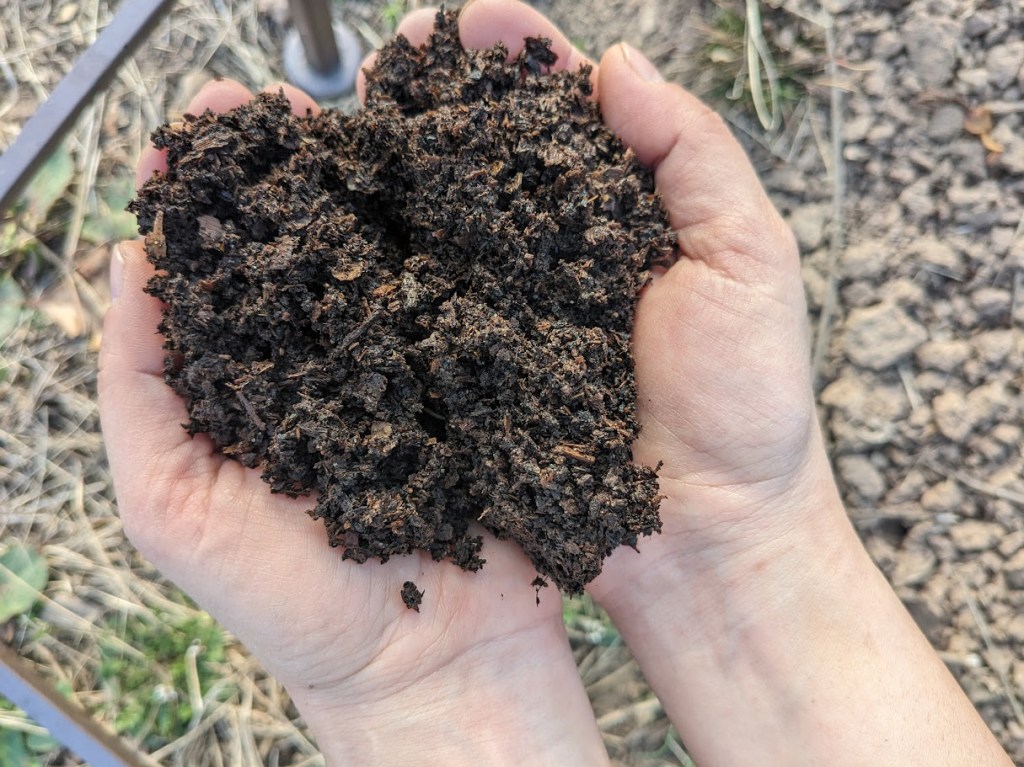
We take pride in being a regenerative farm. What does that mean exactly? Essentially we are doing everything organic farms are doing, and then doing our best to go beyond that. We aren’t just trying to keep things sustainable, we are trying to use methods that will actually improve degraded systems. As trained scientists, we understand more than most how the practices we choose to use and not use can effect more than just the food we grow, but have ripple effects through the broader ecosystem and even globally.
Avoiding Harmful Practices
We try to avoid practices at Hundred Fruit Farm that have negative effects on the soil, water quality, and surrounding ecosystems. Most of these practices are associated with conventional farming, but some of the practices we avoid are ones that are used by large commercial organic farms.
Conventional Farming Practices We Avoid:
- Synthetic Pesticides: These are man-made compounds that are designed to kill target species like insects (insecticides), fungal organisms (fungicides), weeds (herbicides), etc. Because these compounds don’t occur in naturally, they often persist in the soil and water and severely harm soil life, aquatic organisms, birds, insects, and other organisms. They also bioaccumulate up the food chain and pose serious health risks to human beings, being linked to cancers, neurological disorders, and hormone disruption. There is a long history of pesticides like DDT and (most recently) Roundup which were initially claimed to be safe, and later found to cause serious health and environmental problems.
- Synthetic Fertilizers: Synthetic fertilizers are industrially manufactured inorganic compounds that are designed to deliver fast-acting, concentrated nutrients directly to plants. They are water soluble, which means they can be taken up by plants almost immediately. It also means they can leach easily into waterways and cause serious algae blooms (eutrophication) that kill aquatic life and create dead zones in rivers and bays. Synthetic fertilizers feed plants, but they don’t feed soil life. And so the organisms in the soil end up starving or being killed by synthetic fertilizers, which negatively impacts overall soil health, water retention, soil carbon, etc. This loss of soil carbon, and the off-gassing means that synthetic fertilizers are actually a major driver of climate change, contributing an estimated 2-5% of global greenhouse gas emissions.
- GMOs: Genetically Modified Organisms, or GMOs, are living organisms whose DNA has been altered using laboratory techniques (most commonly a gene-editing method known as CRISPR) to introduce specific traits that are seen as valuable from an agricultural point of view. Although this technology could in theory be used for the common good (such as the not-yet successful plan from the American Chestnut Foundation to insert blight-resistance genes that would allow for the restoration of an important keystone species), in practice it has only been used to make biotech companies billions of dollars at the expense of farmers, who lose their right to save their own seed. In the US, where we farm, GMOs are also almost exclusively used to create “Roundup-Ready” crops which have been inserted with a gene that makes them resist the effects of Roundup (glyphosate), a popular herbicide now known to be carcinogenic.
Industrial “Organic” Farming Practices We Avoid:
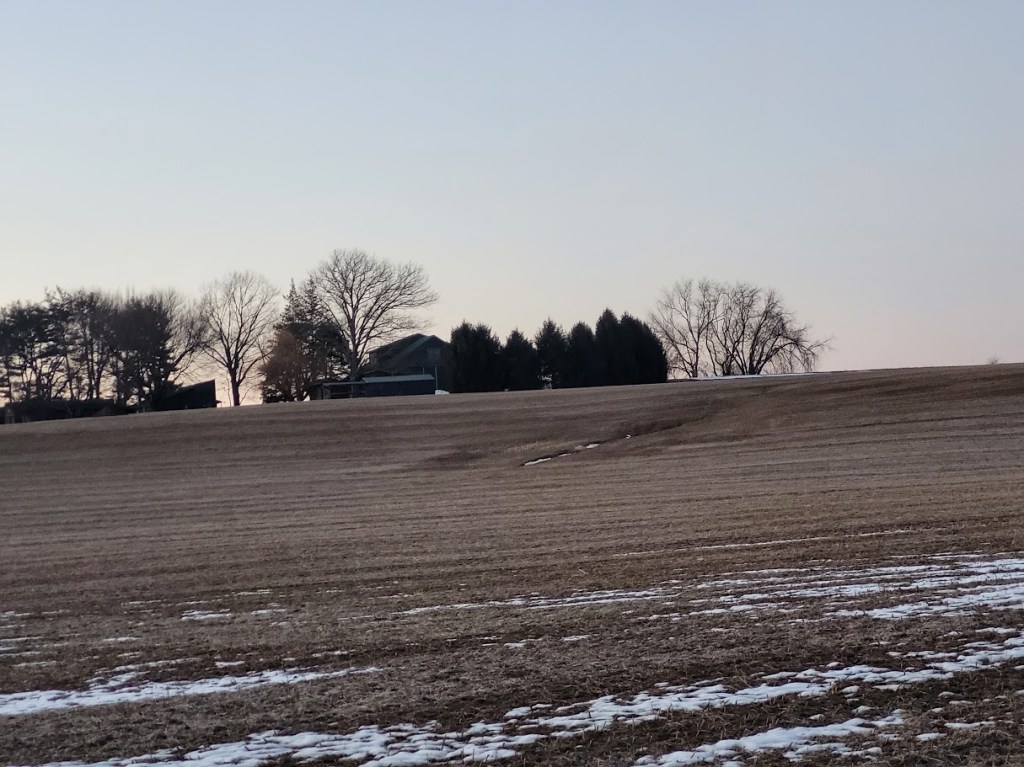
- Annual Tilling: This practice negatively impacts soil carbon, soil structure, and the soil food web, all of which are important elements of healthy soils, and thus, healthy plants. Tilling also increases soil erosion and compaction and brings more weed seeds to the surface, causing worse weed issues in the long run. While we sometimes till to create new rows of berry plants, we don’t use tilling or plowing on an annual basis anywhere in our farm, including our vegetable garden.
- Plastic Mulches: Common on both conventional and large organic produce farms, plastic mulches are sheets of thin plastic which are stretched over beds in which many vegetables and berry plants are grown. They are used primarily to keep weeds down in large-scale growing beds. They are also designed for single-season use only, so they create a tremendous amount of plastic waste every year.
- Organic Pesticides: Although organic farming regulations don’t allow for the use of most synthetic pesticides, naturally-occurring pesticides are allowed under organic regulations. These pesticides are used on many large (industrial) organic farms and include: copper, Bt (Bacillus thuringiensis), boric acid, non-detergent insecticidal soaps, certain dormant oils, peracetic acid, pyrethrins, and many others. Although these sprays are much less dangerous and harmful than the synthetic ones allowed in conventional farming, they can still have serious environmental impacts. Copper, for example, is widely used as a broad-spectrum fungicide in organic orchards. This means it kills both target-species of fungi (fungal pathogens) and non-target species (beneficial soil fungi) alike.
Regenerative Methods and Practices We Use
Regenerative farming is a lot more than just avoiding the use of certain harmful practices. It also has much to do with the beneficial methods and practices we choose to do. These are methods that above all else, support soil health and the soil food web.
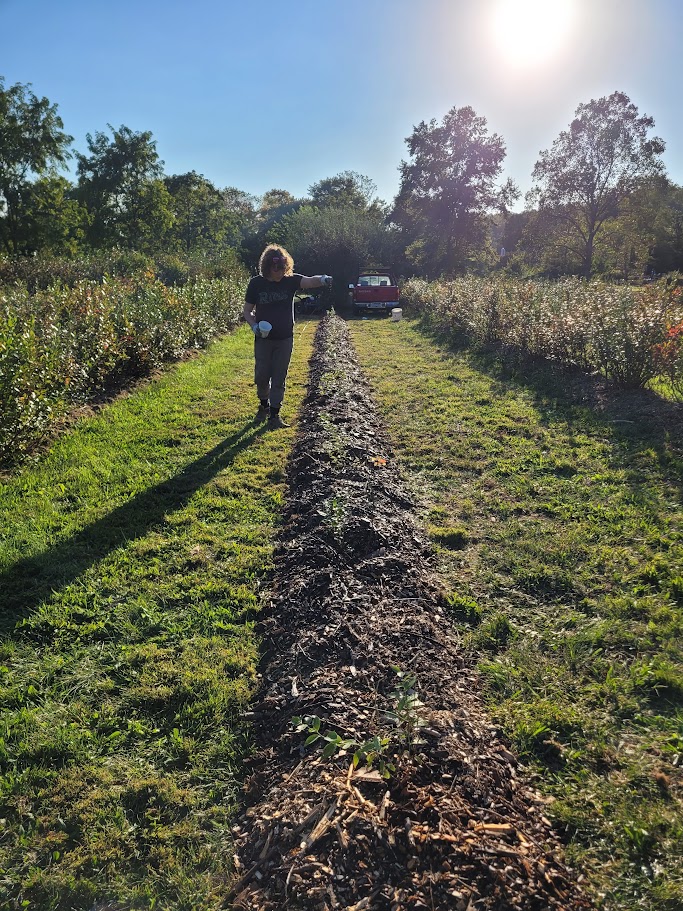
- Mulching with Organic Matter: Mulching is one of the most impactful regenerative techniques we use here at Hundred Fruit Farm. To be clear, mulching doesn’t mean putting down ornamental dyed mulch like you see in ornamental landscaping. It means using any organic material to cover the soil surface. The benefits are numerous – retaining soil moisture (and thus reducing the need to water plants), moderating soil temperature swings, suppressing weeds, increasing soil organic matter, and even providing nutrients for our plants. So while conventional farms might use herbicide, and large organic farms might use black plastic, we use a prodigious amount of wood chips every year on our berry rows, fruit trees, nut trees, garden pathways, and edible landscaping beds. The wood chips we use are from arborists who do tree trimming in the area and need to find places to dump the chips at. So it’s a win-win for us and the arborists. We get great mulch, and they get a convenient place to dump their chips so they can get back to more trimming.
- Use of Native Plants: Not everything we grow at Hundred Fruit Farm is native (because most of the things we all eat are not native), but we do utilize a lot of native plants throughout our farm. Some of these native plants are crops that we grow like pawpaws, aronias, blueberries, and elderberries. Many others are plants that we grow in our marginal areas and gardens to help support native pollinators, beneficial insects, birds, and other wildlife. A full inventory of all these native plants would be too long to list, but some of them include plants like echinacea (E. purpurea), yarrow (Achillea millefolium), wild strawberry (Fragaria virginiana), heal all (Prunella vulgaris), swamp milkweed (Asclepias incarnata), rattlesnake master (Eryngium yuccifolium), black-eyed susan (Rudbeckia fulgida), and clustered mountain mint (Pycnanthemum muticum).
- Animal-Integrated Systems: One major component of regenerative farms is the integration of animal systems. What this means is that animals are not just present on the farm, but they are integrated into the plant systems. In this way, the animals are able to support the plants and the plants are able to support the animals. For many years, we had babydoll sheep on our farm that we would rotate throughout our entire farm, grazing the grass in the fruit and nut orchards, in our silvopasture systems, and anywhere else we could bring them to. Although we don’t have sheep on the farm anymore, we have had chickens integrated into our farm from the very beginning. Our chickens have always been in various mobile coops or “chicken tractors” that we are able to move throughout the farm. This allows us to always give the chickens access to fresh pasture and also ensures that the excess nutrients from all that chicken manure gets spread in targeted areas wherever we need a boost of nitrogen and other nutrients. Other animals we have had at one time integrated into our farm (in addition to the sheep of course) include pigs, ducks, guinea hens, and geese.
- Cover Cropping and Permanent Soil Cover: One of the most important principles of regenerative farms is to always keep the soil covered in some way. For us, this is usually quite easy because most of what we grow is permanently in the ground in the form of trees and shrubs. We use grasses, mulches, and groundcovers to ensure these areas are always vegetated or covered. For our vegetable garden, since these are areas were mostly annuals are grown, we use cover crops and reusable silage tarps to cover the beds over winter or whenever bare soil would exist.
- Composting: Instead of purchasing pricey organic fertilizers, much of our soil fertility comes from our composting system. We compost all our household waste in one area and then use that finished compost in our orchard. We also get horse manure delivered in windrows that we mix with our weeds, chicken manure, and animal bedding in thermophilic piles (meaning they get hot) that produce excellent quality compost that we use in our gardens, orchards, and basically everywhere on our farm. We also make it available to our members for free as a member benefit. So whereas conventional farms might purchase synthetic fertilizers to feed their plants, and harm their soil in the process, with composting, we utilize waste streams to build and repair our soils.
- Crop Diversification: This is another regenerative practice we use on our farm and are big believers in. Crop diversification means growing a wide variety of different crops rather than planting large tracts of a single crop called monocultures. Instead of a ten acre field of corn, which would be a relatively small corn field for these large monoculture farms, our ten acres are packed with dozens of species and cultivars of different berry plants, fruit trees, nut trees, and vegetables, with lots of native plants in the margins. This diversification means enhanced ecology with different habitats and food sources for all kinds of wildlife. It also means extreme resilience in the face of whatever nature throws our way. Whether we get a year with extreme cold, extreme heat, drought, or excess precipitation, there is always some crop on our farm that will thrive in exactly that situation. And the loss of any single one of our crops on our farm would be a setback, but it wouldn’t be completely devastating or mean the end of our farm.
 Hundred Fruit Farm